
How Professional Sewage Cleaning Services Help Prevent Health Risks
Most people see a sewage overflow as a cleaning problem. In reality, it is a serious health and safety issue that requires immediate professional attention. Sewage water can contain harmful bacteria, viruses, parasites, and other contaminants that spread quickly through a property. What appears to be a small spill can create significant risks for occupants if not managed correctly. This is why professional sewage cleanup services are essential when dealing with sewage-contaminated water.
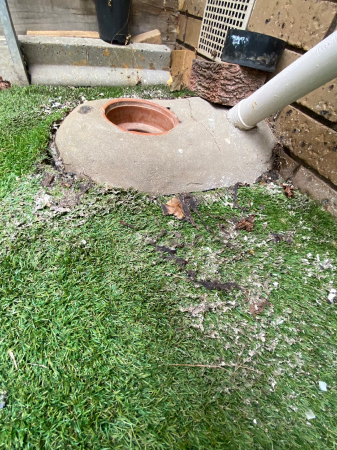
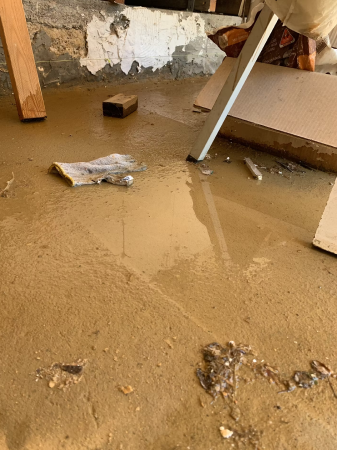
At Capital Facility Services, we regularly respond to sewage overflows caused by blocked drains, burst sewer pipes, toilet overflows, and stormwater backflow. Our focus is not simply removing the contamination that can be seen, but identifying hidden risks and restoring affected areas safely.
Why Sewage Cleaning Services Are Essential
Many property owners underestimate how dangerous sewage contamination can be. Attempting to clean sewage without the correct training or protective equipment can expose people to harmful pathogens and spread contamination throughout the property.
Professional Sewage Cleanup involves far more than mopping up water. Trained technicians use specialised personal protective equipment (PPE) to minimise exposure and follow strict restoration procedures designed to contain contamination and protect occupants. Without these measures, contaminants can be transferred to other rooms, surfaces, and belongings.
A sewage incident can also affect indoor air quality. As contaminated materials begin to dry, harmful particles may become airborne, increasing the risk of exposure. This is one reason why a professional response is critical, particularly in homes, workplaces, healthcare facilities, and other occupied buildings.
Sewage Cleanup: What Can Be Restored and What Cannot
One of the most important parts of any sewage cleanup project is determining which materials can be safely restored and which must be removed.
Porous materials absorb contaminated water deeply into their structure, making complete decontamination extremely difficult. Carpet is a common example. Once sewage has penetrated carpet fibres and underlay, restoration is generally not considered safe. In most cases, contaminated carpet and underlay should be removed to eliminate ongoing health risks.
Other absorbent materials may also require removal depending on the extent of contamination. By contrast, non-porous materials such as concrete, tiles, masonry, and metal surfaces can often be professionally cleaned, sanitised, and restored. Knowing the difference requires experience and a thorough understanding of contamination risks.
Why Experience Matters
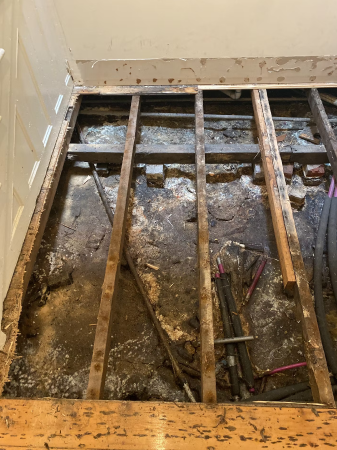
One of the biggest challenges with sewage contamination is that the damage is not always visible. Contaminated water can travel beneath flooring, enter wall cavities, and affect structural materials long after surface water has disappeared.
This is where professional sewage cleaning services make a difference. At Capital Facility Services, our technicians use specialised inspection equipment and proven restoration methods to identify hidden contamination and ensure affected areas are properly treated.
When health and safety are on the line, shortcuts are never worth the risk. Capital Facility Services provides the expertise, equipment, and rapid response needed to manage sewage contamination correctly, helping Melbourne property owners restore safe and healthy environments while minimising disruption and long-term damage.